Device guide / 01
Insulin Syringes
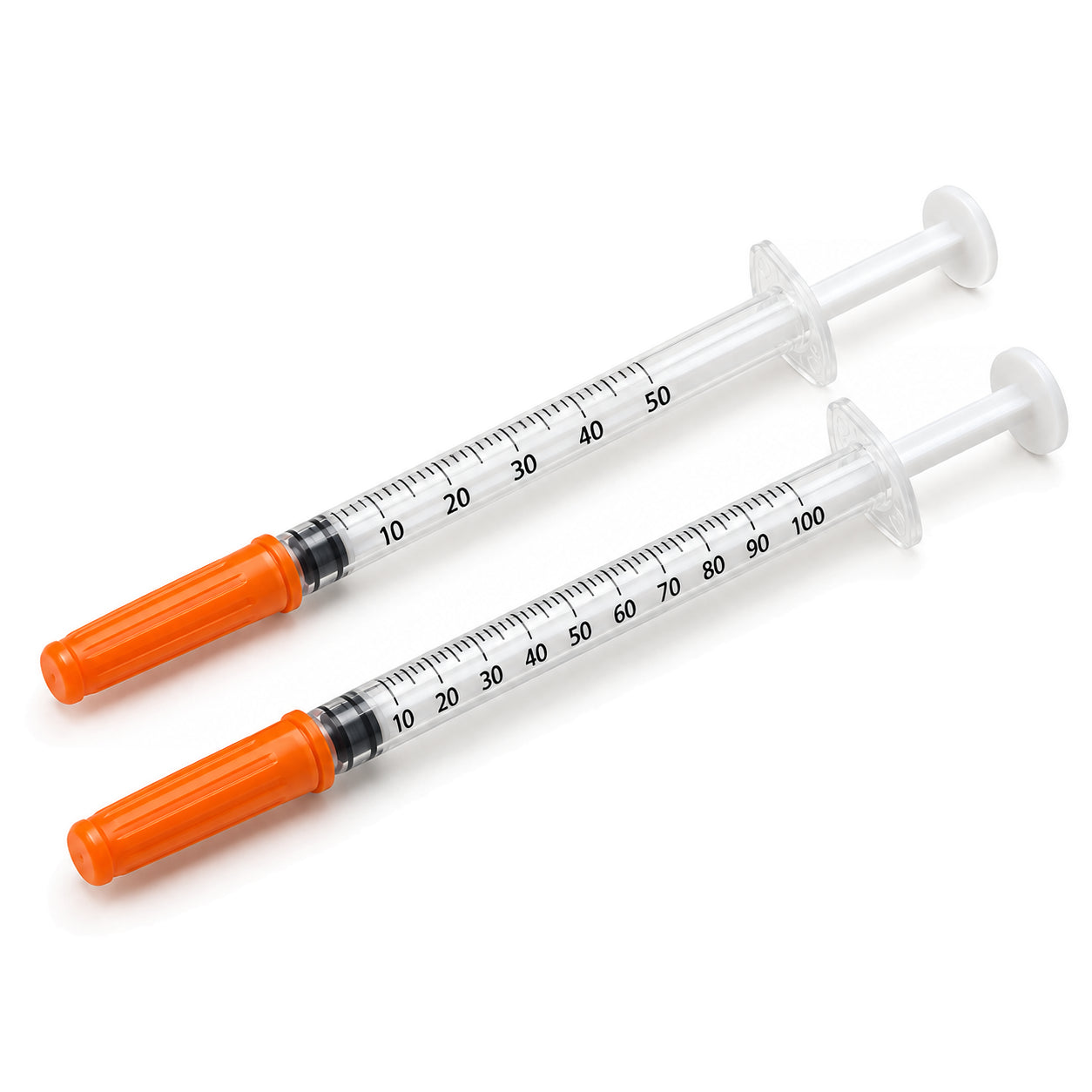
Understand insulin-unit markings, barrel capacity and the needle specifications on an insulin syringe.
- Unit markings
- Capacity
- Needle details
Syringes & Needles
Insulin syringes and general-purpose syringes serve different needs. Explore the markings, connections and needle specifications that distinguish them, then open a guide for a closer look.
Device guide / 01
Understand insulin-unit markings, barrel capacity and the needle specifications on an insulin syringe.
Device guide / 02
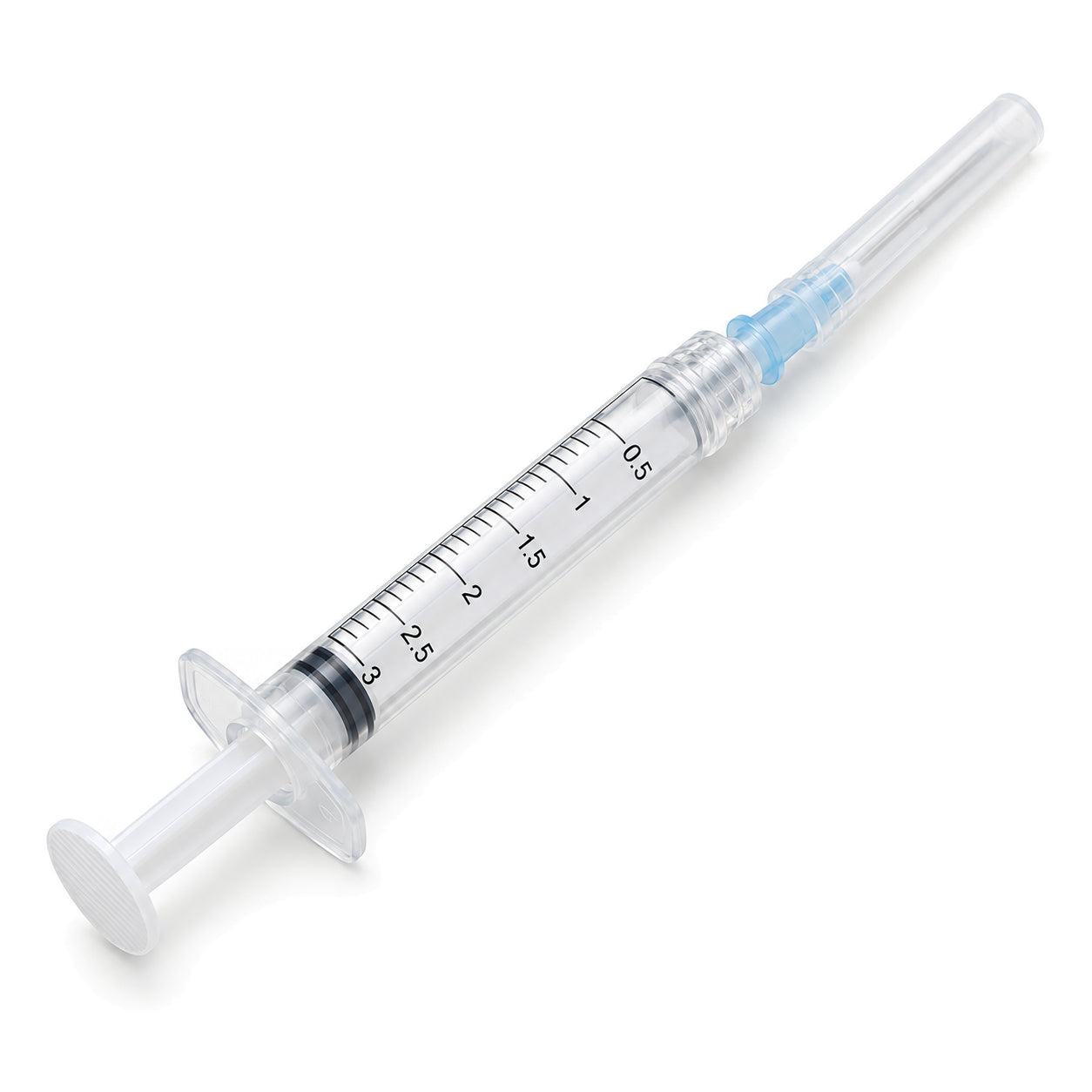
Explore syringes marked in milliliters, with or without needles, and the connections that distinguish individual models.
Know what you’re looking at
The familiar shape is only part of the story. These specifications explain how a device is marked, what it holds and how its parts connect.
Capacity tells you how much the barrel holds. The scale shows the increments you can read. These are separate specifications, and neither replaces the amount prescribed.
An insulin syringe’s unit markings are tied to the insulin concentration identified for that device. Read the calibration as well as the barrel size; similar-looking syringes can use different scales.
Luer lock and luer slip describe different tip designs. A syringe-only package and a syringe supplied with a needle are also different products, even when the barrel capacity matches.
Gauge describes the needle’s outside diameter; length is a separate measurement. Read both together with the syringe details, then confirm the exact device with your clinician or pharmacist.
Device names and photographs are a starting point. Your clinician or pharmacist can confirm the exact syringe and needle needed for your medicine and its instructions.
Before you choose a device
They describe different device categories. Insulin syringes use insulin-unit markings for their specified calibration; general-purpose syringes are commonly marked in milliliters. Capacity, markings and needle specifications all matter. Confirm the exact device and instructions with your clinician or pharmacist before substituting one for another.
Not necessarily. Manufacturers list both permanently attached and detachable needle designs. “With needle” tells you a needle is supplied; the complete product specification tells you how it connects. Look for the device’s exact reference number and connection description.
Use needles and syringes only once and never share them. Place used sharps directly into an FDA-cleared sharps container. Keep it out of reach of children and pets, and follow local guidance when it is ready for disposal.
These guides explain device terminology using manufacturer specifications and public-health guidance. The examples below are references, not a list of products currently offered. Originals open in a new tab.
Put the details together
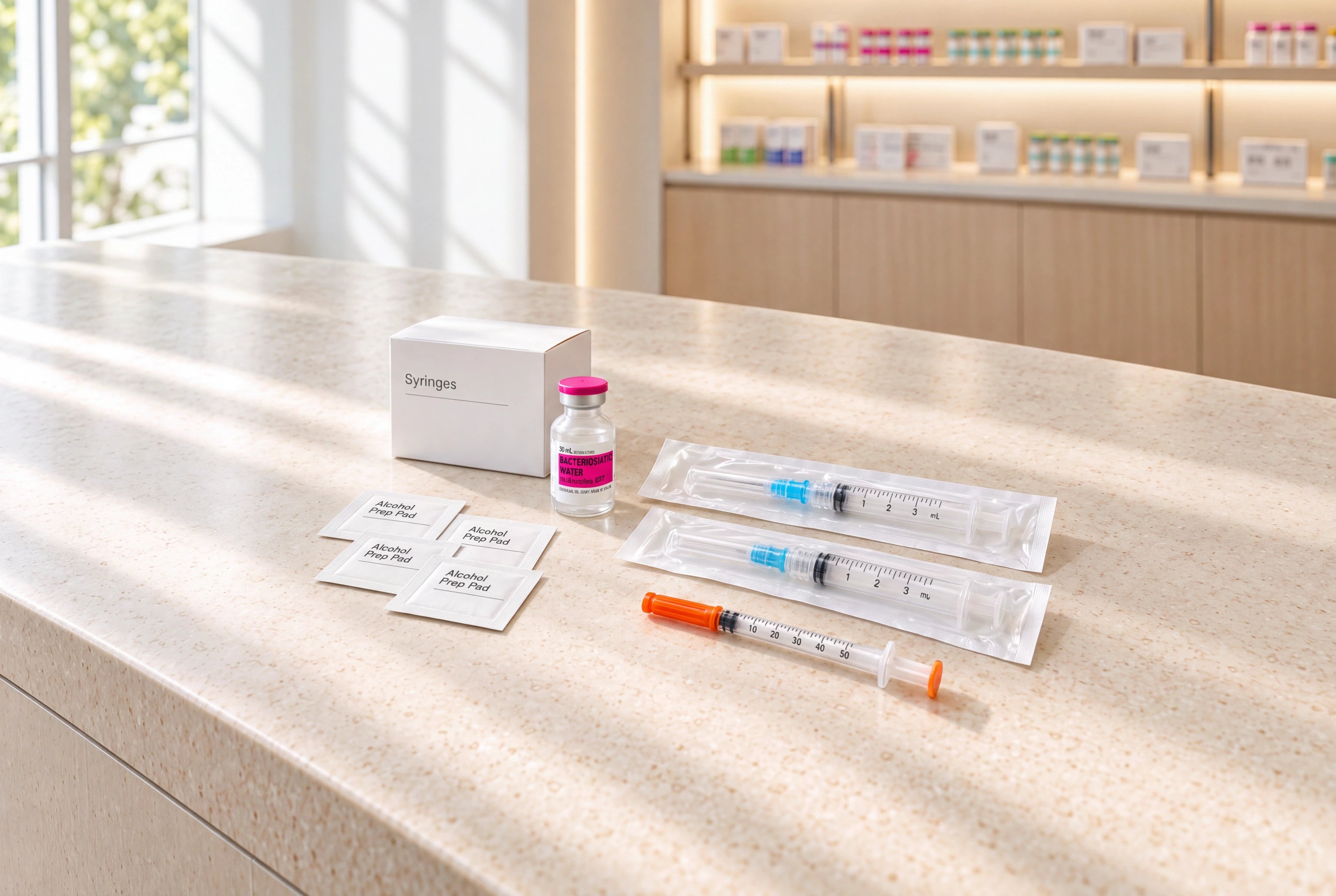
The diluent, syringe and needle each have their own specifications. Continue with the part of the picture you want to understand next.