Diluents
Prescription diluents, clearly explained.
Water or saline, with a preservative or without. Compare the ingredients, vial sizes and handling of four prescription diluents used to dissolve or dilute compatible medicines before injection. Each product guide follows Hospira / Pfizer labeling.
Compare prescription diluents
Scroll within the chart to explore the details. Swipe across to see all four vials.
| Find the distinction.Hospira / Pfizer reference presentations |
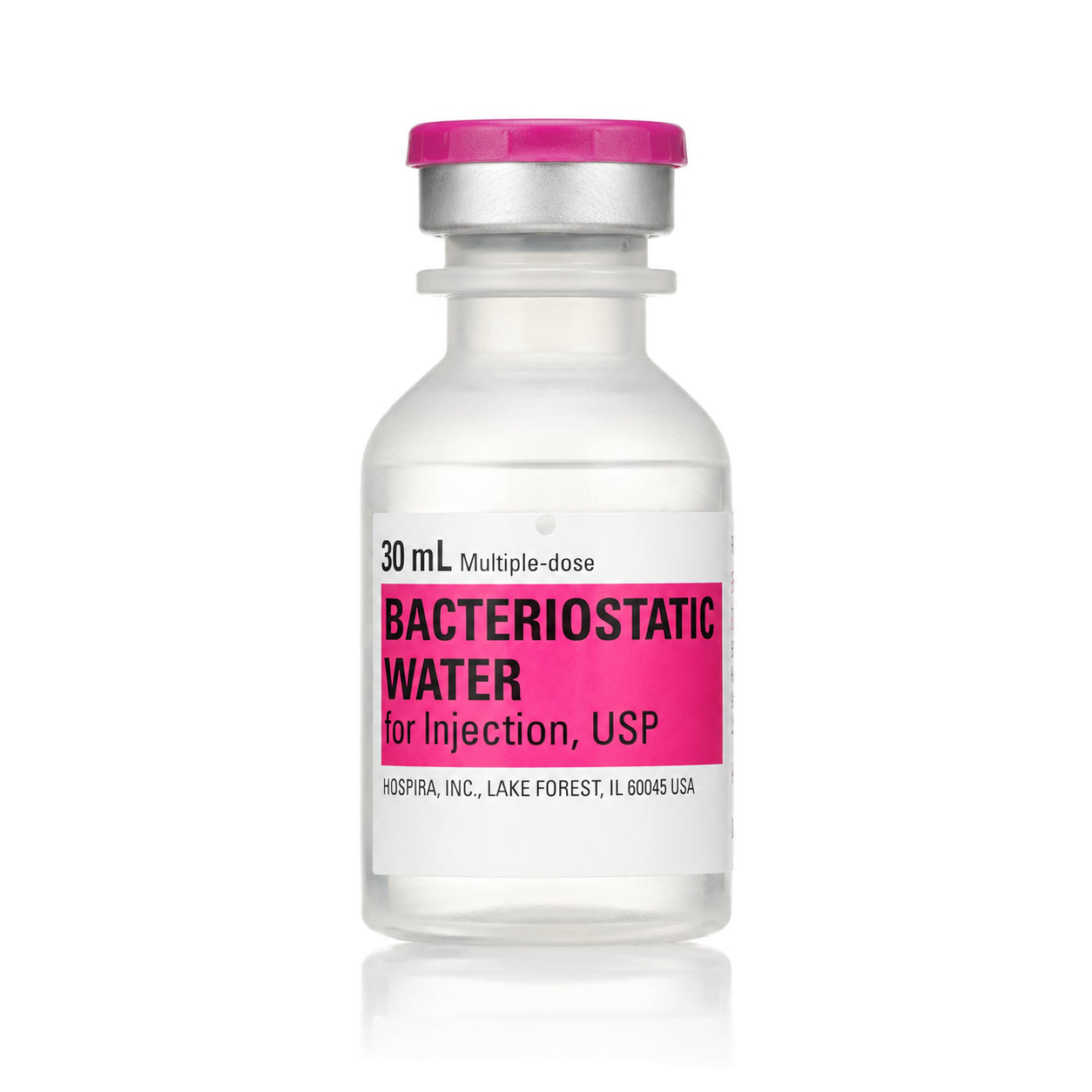
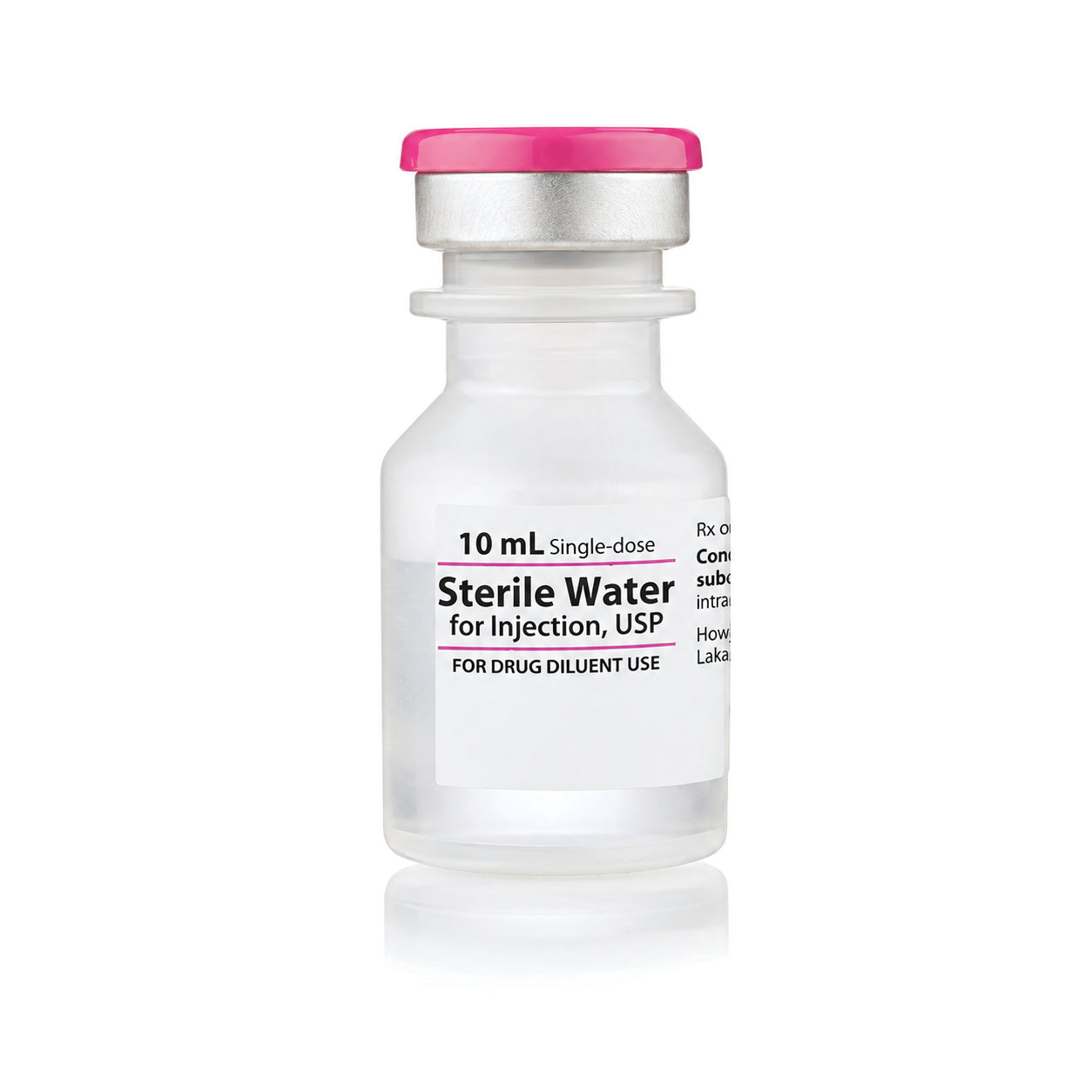
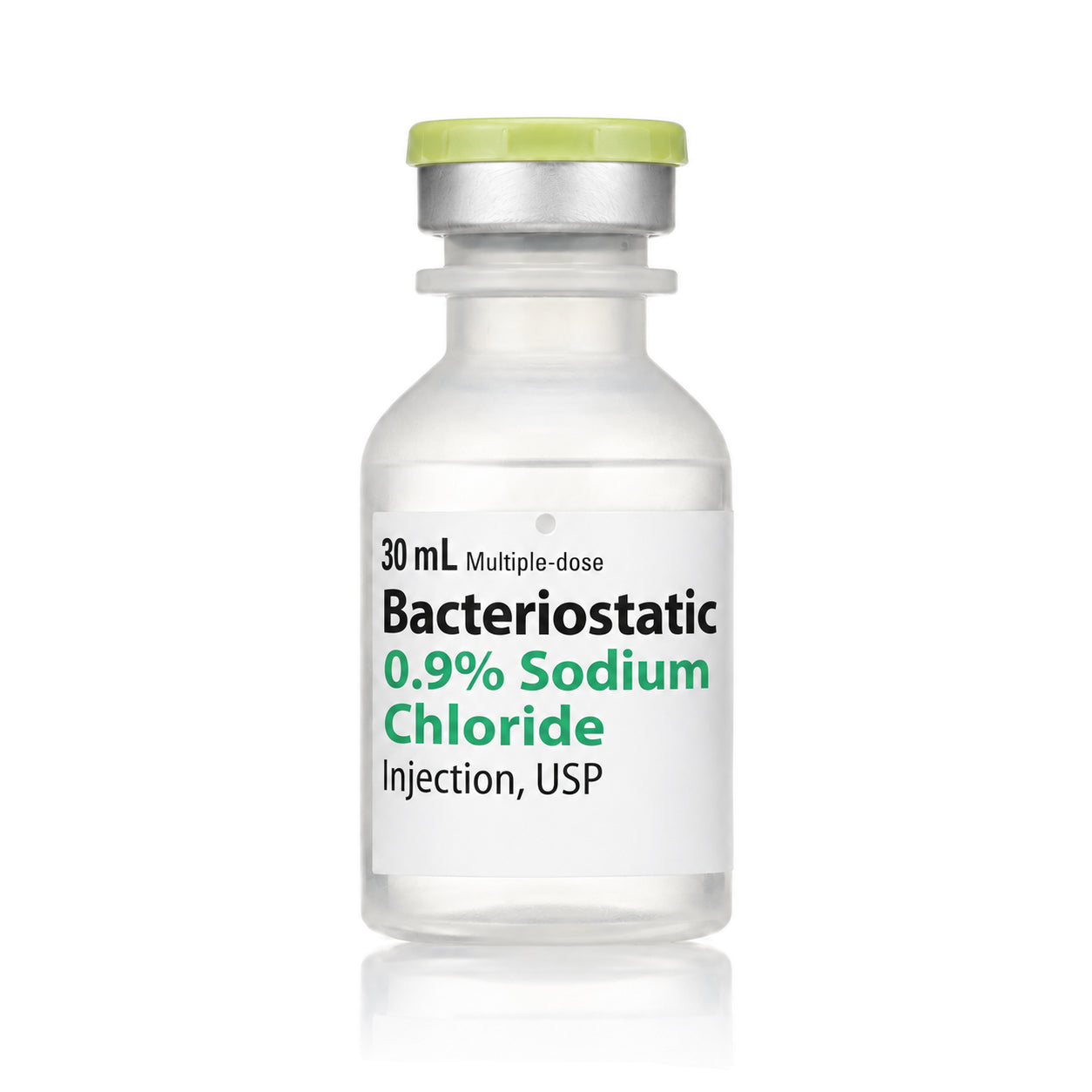
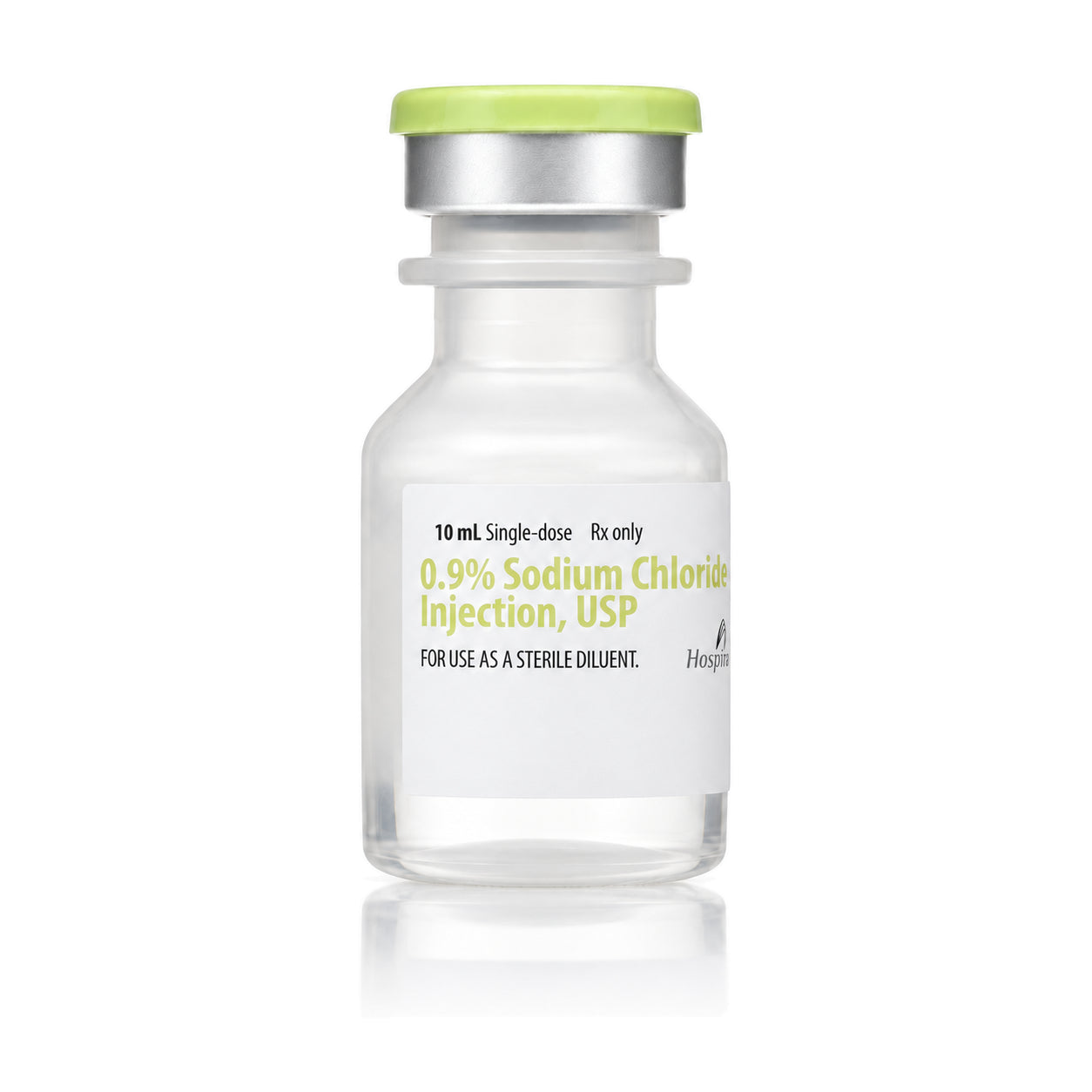
Bacteriostatic water — view product guide Water with 0.9% benzyl alcohol. 30 mL · Multi-dose Label & references | Sterile water — view product guide Water without a preservative. 10 mL · Single-dose Label & references | Bacteriostatic saline — view product guide 0.9% saline with 0.9% benzyl alcohol. 30 mL · Multi-dose Label & references | Preservative-free saline — view product guide 0.9% saline without a preservative. 10 mL · Single-dose Label & references |
|---|---|---|---|---|
| 01 / Inside the vial | ||||
| Base liquid | Water for injection | Water for injection | Water for injection | Water for injection |
| Sodium chloride | None | None | 0.9% (9 mg/mL) | 0.9% (9 mg/mL) |
| Preservative | 0.9% benzyl alcohol (9 mg/mL) | None | 0.9% benzyl alcohol (9 mg/mL) | None |
| Container designation | Multi-dose | Single-dose | Multi-dose | Single-dose |
| Prescription status | Prescription only | Prescription only | Prescription only | Prescription only |
| 02 / Presentation & packaging | ||||
| Reference fill volume | 30 mL | 10 mL | 30 mL | 10 mL |
| Reference container | Plastic vial | Plastic vial | Plastic vial | Plastic vial |
| Other small vial presentations | The label also lists 20 mL in glass with a different preservative concentration: 1.1% benzyl alcohol. Current availability unverified. | 20 mL plastic vial. | 20 mL standard plastic vial; 10 mL LifeShield vial. | 20 mL standard plastic vial; 10 mL LifeShield vial. |
| Reference cap color | Garnet | Garnet | Light Green | Light Green |
| Label appearance in the reference photo | Pink panel with black lettering. | White label with black lettering. | White label with green and black lettering. | White label with yellow-green lettering. |
| 03 / Purpose & handling | ||||
| Role in medicine preparation | Dissolve or dilute a compatible medicine. | Dissolve or dilute a compatible medicine. | Dissolve or dilute a compatible medicine. | Dissolve or dilute a compatible medicine. |
| What the medicine’s instructions must specify | Bacteriostatic water; benzyl alcohol must be appropriate for the medicine and patient. | Preservative-free sterile water. | 0.9% sodium chloride with this benzyl-alcohol-containing formulation permitted. | Preservative-free 0.9% sodium chloride. |
| Routes named in the diluent labeling | Intravenous, intramuscular or subcutaneous, only with a compatible medicine and according to its instructions. | Intravenous, intramuscular or subcutaneous, only with a compatible medicine and according to its instructions. | Intravenous, intramuscular or subcutaneous, only with a compatible medicine and according to its instructions. | Intravenous, intramuscular or subcutaneous, only with a compatible medicine and according to its instructions. |
| Key formulation limits | Not for neonates, fluid replacement, or epidural/spinal anesthesia. Never inject plain water directly into a vein. | Plain water must not be injected directly into a vein; the final medicine preparation must be approximately isotonic. | Not for neonates, fluid/sodium replacement, inhalation, or epidural/spinal anesthesia. Not a substitute for preservative-free flush saline. | This reference is an injection diluent vial. Do not assume it replaces other saline products or a medicine’s supplied diluent. |
| Unused contents | Multi-dose handling requirements apply. A preservative does not make contamination harmless. | Discard unused contents; do not save for later use. | Multi-dose handling requirements apply. A preservative does not make contamination harmless. | Discard unused contents; do not save for later use. |
| Unopened vial storage | 20–25°C (68–77°F). | 20–25°C (68–77°F). | 20–25°C (68–77°F). | 20–25°C (68–77°F). |
| After a medicine is mixed | Follow that medicine’s preparation, storage and discard instructions. | Follow that medicine’s preparation, storage and discard instructions. | Follow that medicine’s preparation, storage and discard instructions. | Follow that medicine’s preparation, storage and discard instructions. |
No differences are shown for this selection. Turn off the filter to see all details.
A vial’s volume is not an injection dose. Sizes above are manufacturer-listed references, not a stock list. This comparison focuses on small vial presentations.
Color is a visual cue, not a compatibility guide. Cap names apply to these exact Pfizer catalog references; label descriptions refer to the photos shown. Different formulations can share a cap color. Read the product name and formulation.
All four are prescription diluents, but they are not automatically interchangeable. Your medicine’s prescribing instructions determine the appropriate diluent, administration route and handling after mixing; your clinician or pharmacist can clarify what is required.
The medicine makes the difference
Peptides and other prescription medicines
Peptide and protein medicines do not share one universal diluent. Even two versions of the same medicine can require different liquids. These examples show why the exact formulation matters.
Same active ingredient. Different supplied diluents.
EGRIFTA WR and EGRIFTA SV both contain tesamorelin. Each label specifies the diluent supplied with that formulation:
EGRIFTA WRSupplied bacteriostatic water
EGRIFTA SVSupplied sterile water
The formulations are not interchangeable. A separate vial should not be assumed to replace a supplied diluent. Read the label references
Two more examples: glucagon and botulinum toxin
GlucaGen HypoKit · glucagon
This peptide medicine’s powder kit includes sterile water for preparation. The example applies to that kit, not every glucagon product. Label reference
BOTOX · onabotulinumtoxinA
Its prescribing information specifies sterile, preservative-free 0.9% sodium chloride. Bacteriostatic saline is a different formulation. Label reference
These examples explain diluent requirements; they are not a medicine selection guide. Your clinician or pharmacist can confirm the diluent required for your exact prescription, including any supplied with it.
A closer look
Small details. Useful answers.
Does 0.9% mean the same thing on every vial?
No—the ingredient named beside the number matters. In the 30 mL bacteriostatic water reference, 0.9% describes benzyl alcohol. In saline, 0.9% describes sodium chloride. The bacteriostatic saline reference contains both at that concentration.
Does vial size tell me whether it can be used more than once?
No. The volume and the single-dose or multi-dose designation describe different things. The single-dose references shown here must not be reused; unused contents are discarded. Each product guide explains the container information for its reference vial.
How do I know which diluent my medicine needs?
Start with the medicine’s prescribing instructions. Your clinician or pharmacist can clarify the required formulation and whether a preservative is appropriate. A similar name or matching vial size does not establish compatibility.
Sources & manufacturer references View originals
Facts checked against the prescribing information and manufacturer catalog entries below. Original sources open in a new tab; educational medicine examples do not describe medicines offered by this site.
- Bacteriostatic Water for Injection, USP. Prescribing information (opens in a new tab); 30 mL reference and cap color (opens in a new tab). The 20 mL glass formulation is listed in the prescribing information.
- Sterile Water for Injection, USP. Prescribing information (PDF) (opens in a new tab); 10 mL reference and cap color (opens in a new tab); 20 mL presentation (opens in a new tab).
- Bacteriostatic 0.9% Sodium Chloride Injection, USP. Prescribing information (opens in a new tab); 30 mL reference and cap color (opens in a new tab); 20 mL presentation (opens in a new tab); 10 mL LifeShield presentation (opens in a new tab).
- 0.9% Sodium Chloride Injection, USP. Prescribing information (opens in a new tab); 10 mL reference and cap color (opens in a new tab); 20 mL presentation (opens in a new tab); 10 mL LifeShield presentation (opens in a new tab).
- Tesamorelin formulation examples. EGRIFTA WR prescribing information (opens in a new tab) and EGRIFTA SV prescribing information (opens in a new tab), sections 2.1–2.2.
- Glucagon example. GlucaGen HypoKit prescribing information (PDF) (opens in a new tab), sections 2 and 11.
- Botulinum toxin example. BOTOX prescribing information (PDF) (opens in a new tab), section 2.2.
- Handling. CDC guidance on safe injection practices (opens in a new tab).
Keep exploring
Follow the details that interest you.
Bacteriostatic water vs. sterile water
Go beyond the names: understand the preservative, container and labeling differences between these two water formulations.
Read the comparison