Syringes & needles

General-Purpose Syringes

With and without needles

General-purpose syringes measure liquid medicines in milliliters. Compare the barrel, connection and package format—syringe only or supplied with a needle—to understand the complete device specified for your care.
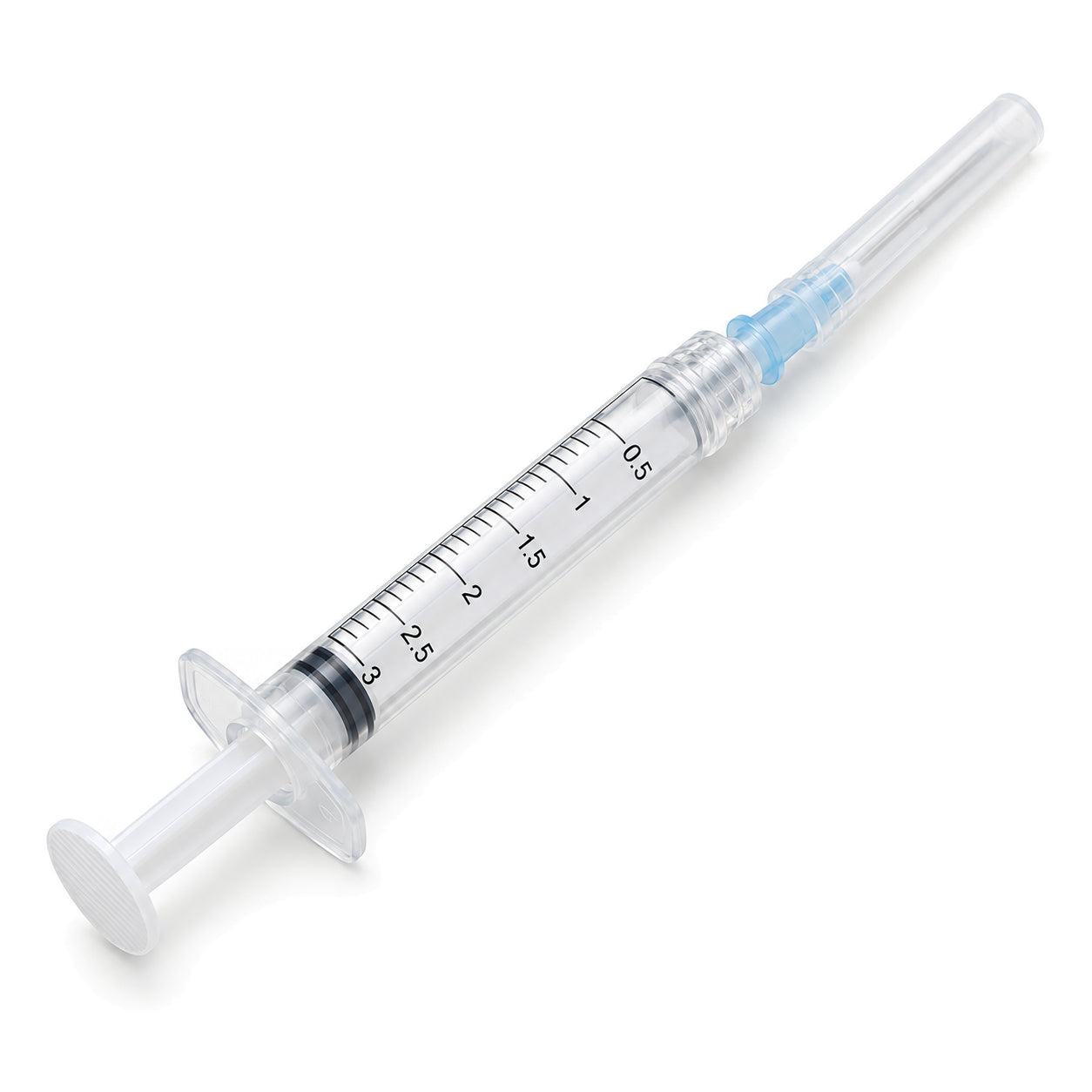
  • Capacity & scale
  • Connection
  • With or without needles
Join the waitlist

Get updates on our telehealth launch.

Understanding the device

Start with the barrel. Check the complete device.

A syringe’s volume is only part of its description. Its scale, connection and any included needle matter too—whether you are reading a new package or checking a replacement.

Three details to check

Capacity & scaleBarrel volume and mL markings
ConnectionThe specified syringe tip
Package formatSyringe only or with a needle
Use the complete manufacturer reference to identify the device. [2] [5]

Read capacity and markings together

Capacity is the volume the syringe holds. The marked scale shows the measurement increments, which can differ between models. Neither tells you the prescribed amount on its own; compare the device with your medicine’s instructions. [2]

Check the connection

Luer lock and luer slip are different tip designs. BD describes luer slip as a friction-fit connection and lists both types in the same capacities. Match the specified tip and compatible supplies rather than choosing by barrel size alone. [7]

Know what the package contains

A syringe-only product is different from a syringe supplied with a needle. In a combination, the syringe capacity and needle gauge and length remain separate specifications. Keep that complete description when discussing a replacement. [5] [6]

Specifications & device distinctions

Specifications

The details behind the product name.

The exact product reference brings the barrel, tip and any included needle into one device description. [5] [6]

Capacity
The syringe’s stated volume in mL
Scale
The measurement increments marked on the barrel
Connection
The specified tip, such as luer lock or luer slip
Package format
Syringe only, syringe with needle, or a separate needle
Needle details
Gauge, length and any stated design features
Product reference
The manufacturer’s catalog identifier

The same capacity can appear with different connections or needle specifications. Keep the complete description when discussing a replacement. [5] [6]

Needle details

The needle is a separate part of the specification.

Gauge describes outside diameter; length is separate. In BD’s conventional needle range, higher gauge numbers correspond to smaller outside diameters. [1]

Needle wall and tip design can also differ. A matching gauge and length do not identify every feature. Blunt fill and filter devices are separate from conventional injection needles. [1] [2]

Use the written specification rather than hub color alone. BD identifies color-coding exceptions in part of its U.S. range. [1]

Explore insulin syringe calibration and specifications

See how the supplies fit together.

Compare the two syringe families, then explore the other supplies that may be part of a prescribed care plan.

How it works

The medicine and supplies, considered together.

We’re building a telehealth service that connects clinical evaluation, prescription review and the supplies a care plan requires.

  1. Review your care needs

    Discuss the medicine, its instructions and any existing guidance about the required supplies.

  2. Confirm the complete device

    Review capacity, markings and connection, plus any needle specifications, with the care team.

  3. Plan fulfillment

    Clarify prescription requirements and available delivery options after the required checks.

Already have a prescription? A separate pathway for prescription review and associated supply needs is also planned.

More about our planned service

Use & handling

Single use. Safe disposal.

  • Use a new sterile device. Single-use syringes and needles are discarded after use. [4]
  • Never share. Replacing the needle does not make a used syringe safe for another person. [4]
  • Plan for sharps disposal. Put used sharps directly into an FDA-cleared container. Follow the marked fill limit and local disposal guidance. [3]

Follow the device labeling and your care team’s instructions. This page does not select a syringe or needle for a particular medicine, convert a dose or teach injection technique.

Common questions

Your questions, answered.

Does a syringe always include a needle?

No. Manufacturers identify syringe-only products separately from syringes supplied with needles. Check the full package description and exact product reference. [5] [6]

Does matching capacity mean it is the same syringe?

No. The connection and other specifications may differ. BD lists luer-lock and luer-slip tips in the same capacities, so confirm the complete device before substituting. [7]

Are these the same as insulin syringes?

This page covers general-purpose syringes described in mL. Insulin syringes use insulin-specific calibration. See Insulin Syringes for those distinctions, and confirm the required device with your care team.

Can I reuse a syringe if I change the needle?

No. A new needle does not make a used syringe a new device. Follow single-use labeling and discard the used equipment safely. [4] [5] [6]

Original information

Sources & further reading.

  1. BD: Disposable hypodermic needle technical data sheet (opens a new tab)
  2. BD: Hypodermic product catalog (opens a new tab)
  3. FDA: Sharps Disposal Containers (opens a new tab)
  4. CDC: Preventing Unsafe Injection Practices (opens a new tab)
  5. BD: 3 mL syringe-only specification example (opens a new tab)
  6. BD: Syringe with needle specification example (opens a new tab)
  7. BD: Conventional syringe tip designs (opens a new tab)

Sources checked October 19, 2026. Manufacturer references explain device specifications. Follow your care team’s individual instructions.